Data science is changing how businesses understand their customers, manage resources, and plan for future growth. Organizations increasingly use analytical solutions to identify opportunities, reduce risks, and improve operational performance. For students and fresh graduates, developing practical data science projects is an effective way to demonstrate their Data Science Course in Chennai knowledge and prepare for employment. However, a project becomes industry relevant when it reflects real workplace challenges and demonstrates how data can help solve them. Combining technical expertise with business understanding makes a project more valuable to potential employers.

Focus on Realistic Industry Problems
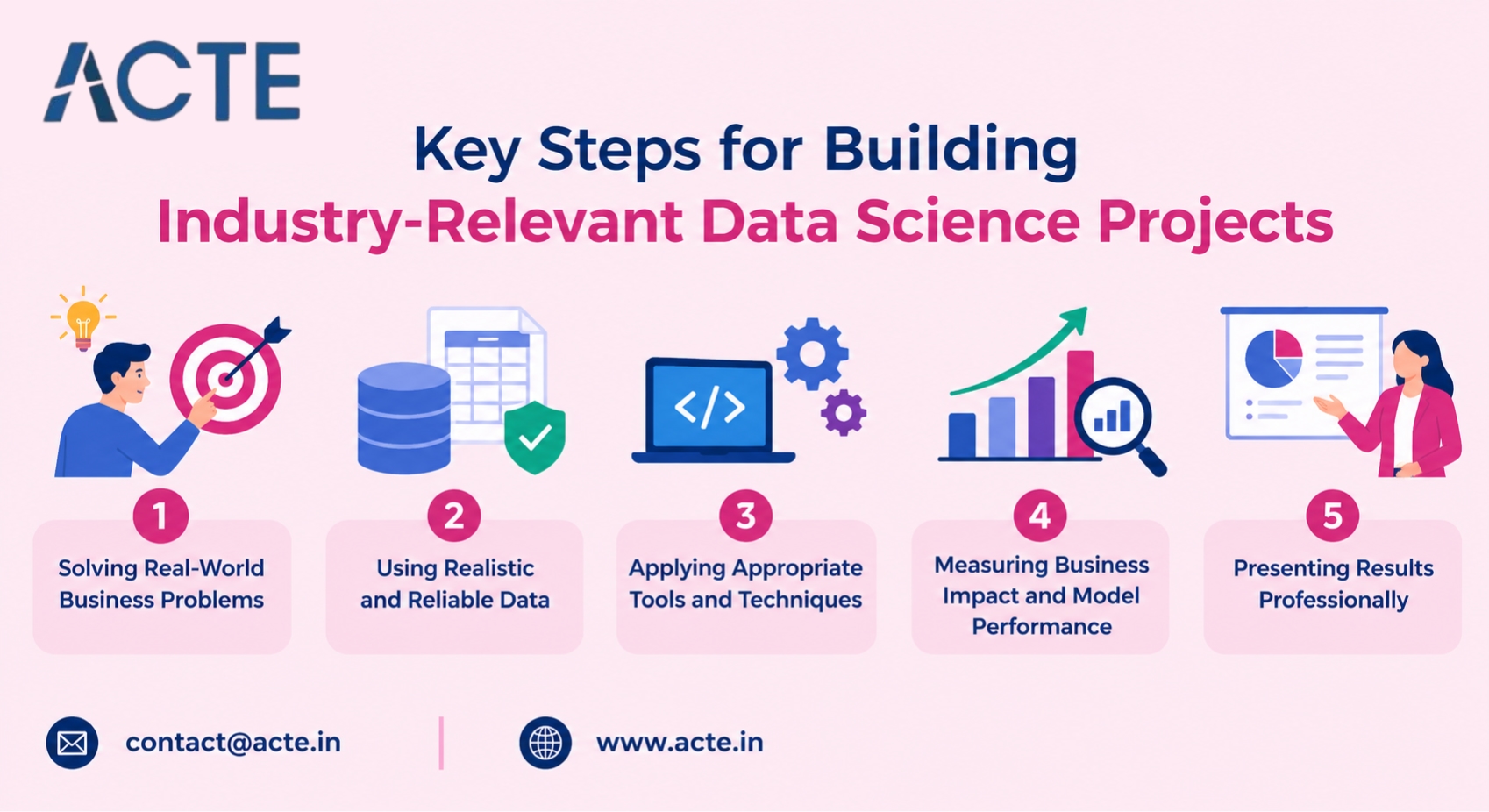
The first step in creating a relevant data science project is identifying a problem that businesses genuinely need to solve. Common applications include customer churn prediction, sales forecasting, fraud detection, inventory optimization, and customer segmentation. For example, an online shopping company may analyze purchasing patterns to improve product recommendations, while a manufacturing business could use historical equipment data to anticipate maintenance requirements. Such projects demonstrate the practical applications of data science. A clearly defined objective also helps candidates explain why their solution matters and how it could support business performance.
Prioritize Data Quality and Accuracy
Reliable results depend on the quality of the information used for analysis. In real business environments, datasets may contain missing values, duplicate records, incorrect entries, and inconsistent formats. An effective project should demonstrate how these issues are identified, corrected, and documented. Candidates can work with publicly available datasets or realistic Data Science Course in Bangalore synthetic data to explore industry scenarios. They should also perform exploratory data analysis to discover trends, correlations, and unusual patterns. Careful data preparation improves the reliability of the analysis and demonstrates an understanding of an essential stage in professional data science workflows.
Apply Relevant Tools and Analytical Techniques
Employers look for candidates who can choose suitable technologies and apply them effectively. Python is widely used for data manipulation, statistical analysis, and machine learning, while SQL supports database querying and information retrieval. Libraries such as Pandas, NumPy, and Scikit-learn help Data Science Course in Hyderabad streamline analytical tasks. Visualization tools such as Tableau, Power BI, and Matplotlib make findings easier to communicate. Candidates should select techniques according to the project's purpose and explain their decisions. The emphasis should remain on solving the problem effectively rather than using advanced algorithms simply to make the project appear sophisticated.
Measure Results and Explain Their Significance
A practical project should demonstrate whether its proposed solution performs as expected. Candidates can use appropriate evaluation metrics, including precision, recall, F1-score, or mean absolute error, depending on the analytical task. Comparing results against a baseline provides additional context. Beyond model performance, candidates should describe potential business benefits, such as reducing customer losses, improving demand planning, or identifying operational inefficiencies. They should distinguish actual measured outcomes from estimated benefits and discuss any limitations. This balanced approach demonstrates analytical reasoning and an understanding of how organizations evaluate data-driven solutions.
Build a Professional Project Portfolio
Presenting work clearly helps employers evaluate technical knowledge and problem-solving ability. Each project should include the objective, dataset, tools, methodology, results, and recommendations. Candidates can publish their code on GitHub and use dashboards or visual reports to highlight important Data Science Online Course findings. Clear documentation makes the work easier to understand and reproduce. Explaining challenges, design choices, and future improvements also demonstrates independent thinking and professional communication skills.
Conclusion
An industry-relevant data science project connects technical knowledge with genuine business requirements. It combines realistic problem selection, reliable data preparation, appropriate analytical methods, meaningful evaluation, and effective presentation. By building projects that demonstrate practical value instead of focusing exclusively on algorithms, aspiring data scientists can create stronger portfolios and show employers their readiness for workplace challenges. These experiences can support career development and improve opportunities across industries that rely on data-driven decision-making.
Comments